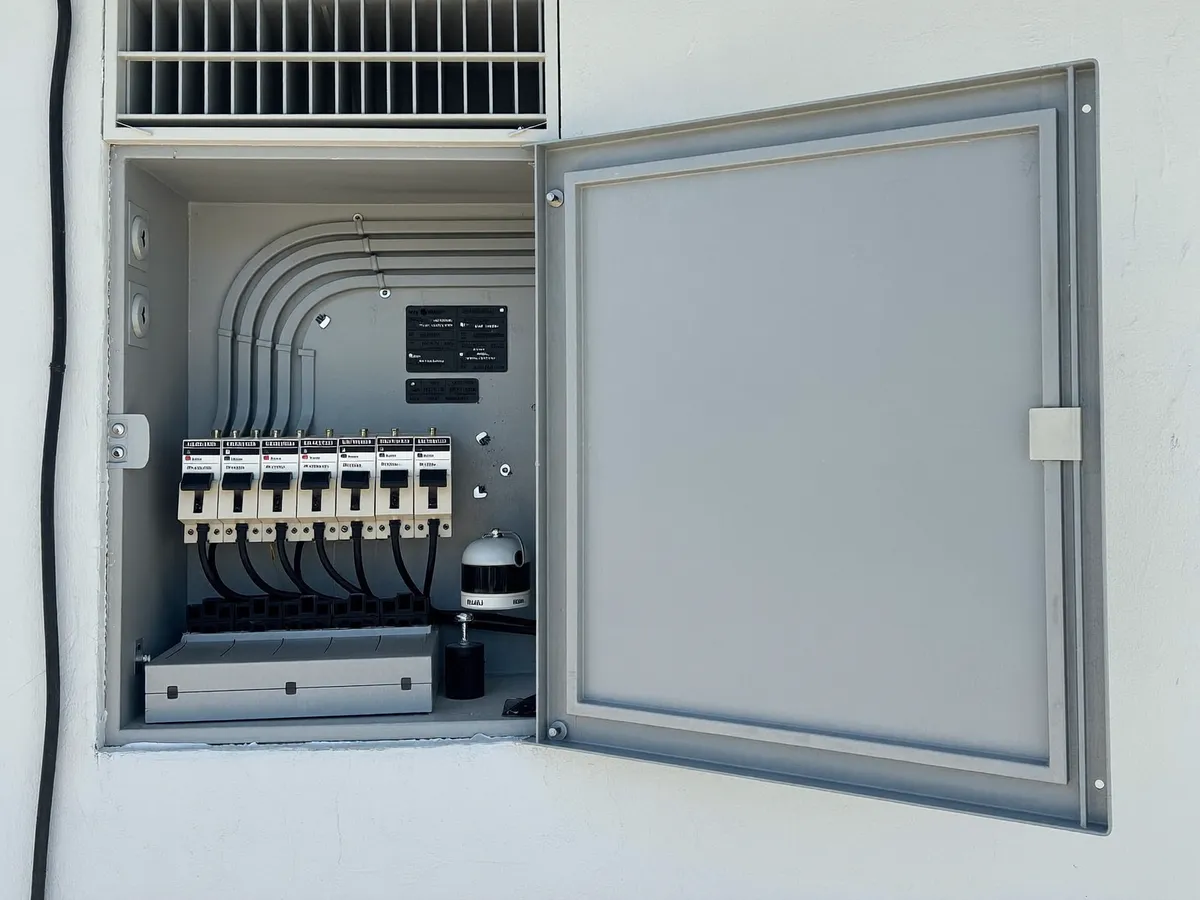
"Why does my MCB keep tripping in Bali?" is the single most common question we get on WhatsApp. It is also one of the most misunderstood, because the obvious "fix" — fitting a bigger breaker — is the most dangerous thing you can do. Here is what is actually happening when your MCB trips, and how to find the real cause.
First, what an MCB is doing when it trips: it is protecting your wiring. A miniature circuit breaker is sized to cut the power before the cable behind it overheats. So a trip is not a malfunction — it is the safety system working. The job is to find why it is reaching its limit, not to raise the limit so it stops complaining. There are three honest causes, and a fourth that is specific to the tropics.
The most common cause in Bali. A circuit built for lights and sockets ends up running an AC unit, a kettle and a water heater at the same time, and the combined current exceeds the MCB's rating. It usually trips at a predictable moment — when the second AC kicks in, or when someone boils the kettle while the water heater is on. The fix is to add a properly sized dedicated circuit for the heavy appliance, not to oversize the MCB. We see this constantly in villas where AC was added after the original wiring was done.
A failing appliance — often a water heater element, a fridge compressor or a cheap power adapter — can draw excess current or leak to earth and trip the breaker. The quick test: unplug everything on that circuit, reset the breaker, then plug items back in one at a time until it trips. The last thing you plugged in is your culprit. If it trips with nothing plugged in, the fault is in the fixed wiring, not an appliance.
If the trip is immediate and happens with appliances unplugged, you likely have a short circuit or earth leakage in the fixed wiring. This needs an insulation tester to locate — you cannot find it by eye. On an RCBO or RCD, earth leakage is the usual trigger: current escaping to earth through damaged insulation or a wet connection. This is the cause you should never ignore, because it can mean a live conductor is touching something it should not.
Here is the one that catches people out. A breaker that holds fine all day but trips overnight or first thing in the morning is very often moisture-related. Overnight humidity and dew get into an outdoor junction box, garden light fitting or pool equipment connection, creating an earth-leakage path that trips an RCD. As the day warms and things dry out, it stops. If your trip has a daily rhythm, suspect water before anything else.
This deserves repeating because it is the most dangerous shortcut in Bali electrics. If a 16A breaker keeps tripping and someone swaps it for a 25A one, the tripping stops — but now the cable, which may only be rated for 16A, carries 25A before anything cuts out. The cable overheats inside the wall, the insulation degrades, and that is precisely how an electrical fire starts. The trip was protecting you. Removing the protection does not fix the problem; it hides it until it becomes a fire.
Our approach is methodical: confirm whether it is overload, appliance or wiring by isolating the circuit and testing under load; use an insulation tester to find earth leakage or shorts in fixed wiring; check outdoor boxes and fittings for moisture ingress; and verify the earthing is real so any RCD can do its job. Then we fix the actual cause — add a circuit, repair the fault, weatherproof the connection — and test it. Most tripping problems are solved in a single visit.
If your breaker keeps tripping, read our overview of the most common electrical problems in Bali villas, or get it sorted with our repair and fault finding or panel upgrade services. WhatsApp us with the symptom and your area — free advice, no pressure.